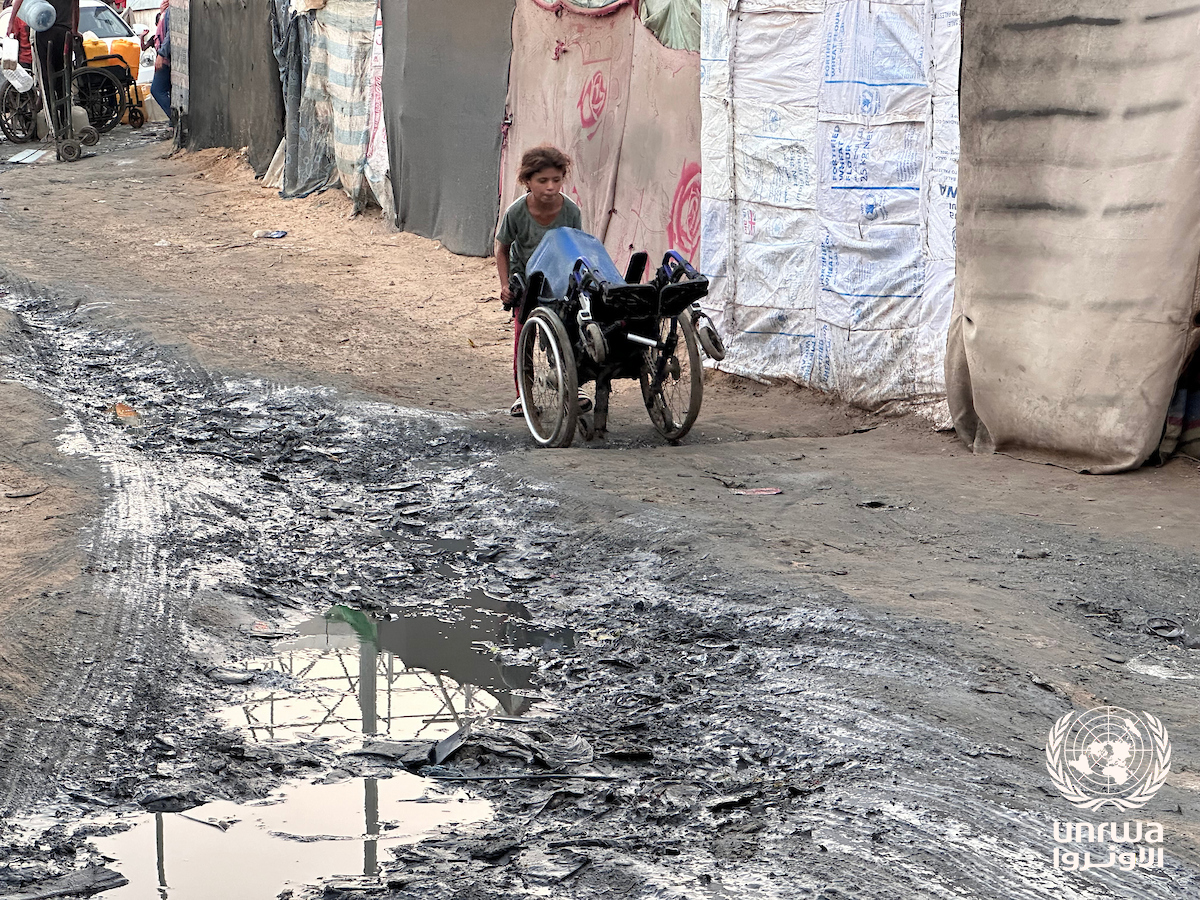
In Gaza, access to safe drinking water and sanitation services remains severely compromised. In its humanitarian report of 11 September 2026, OCHA states that 91% of assessed households face moderate to high water insecurity. Many families still depend on water delivered by truck, while water, sanitation and waste-management infrastructure remains fragile or damaged.
The situation could deteriorate further with the arrival of the rainy season. At overcrowded displacement sites, humanitarian actors are working to improve drainage, reinforce shelters and reduce flood risks. OCHA notes, however, that these preparations remain constrained by access restrictions, funding shortages and restrictions on the entry of essential materials.
Water and sanitation services also depend heavily on generators. OCHA reports that, since 1 March 2026, only 13,445 litres of engine oil had been approved for entry into Gaza, while 92,778 litres remained pending approval. A significant share of these quantities is intended for water, sanitation, waste management and health services.
The health consequences are already visible. WHO says that overflowing sewage, accumulating waste and limited access to safe drinking water are creating increasingly dangerous conditions. It also reports that cases of acute watery diarrhoea have nearly doubled this year. With the rains, flooding could spread sewage and contaminated water through densely populated areas and increase the risk of disease.
UNICEF had already documented a sharp deterioration in access to water and sanitation during the first half of 2026. In July, the organisation estimated that 82% of families were experiencing water insecurity and that up to 70% did not have access to six litres of water per person per day.
These figures show a situation in which water, sanitation and health needs remain closely interconnected. As the rains approach, the ability of infrastructure to function and of humanitarian actors to maintain networks and displacement sites will be decisive in preventing a further deterioration in living conditions.